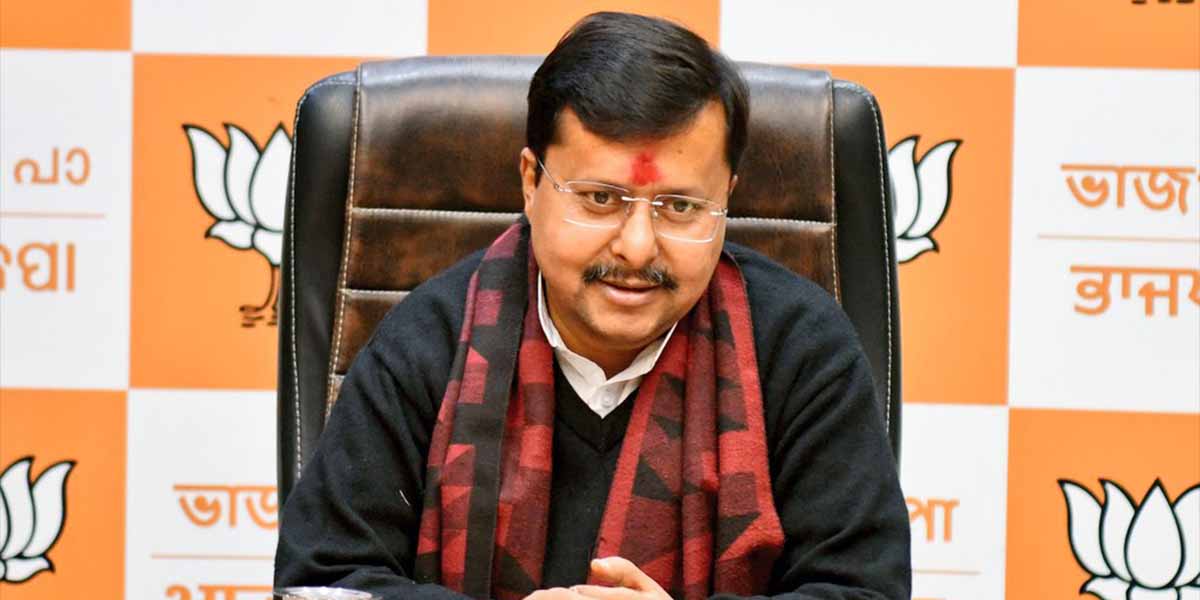
New Delhi: Nitin Nabin was elected the 12th national president of the Bharatiya Janata Party (BJP), marking a significant generational and organisational moment for India’s ruling party. The announcement was made at the BJP headquarters in New Delhi. Nabin, who had been serving as the party’s working president since December 14, 2025, was elected unopposed after emerging as the sole nominee for the full-time post.
At the event, Prime Minister Narendra Modi felicitated Nabin and delivered a 55-minute address in which he underlined the party’s organisational ethos. “I am a worker of the BJP. I believe Nitin ji is my boss. He will now evaluate my work,” the Prime Minister said, signalling the party’s emphasis on internal hierarchy and discipline.
In his first address as national president, Nitin Nabin described his elevation as recognition of grassroots politics. “My election as national president is an honour bestowed on the extraordinary journey of an ordinary party worker,” he said.
While the decision has been welcomed by a large section of the party, it has also surprised some workers, particularly those unfamiliar with Nabin’s political rise. A section of the cadre expressed mild discontent over what they saw as the sudden emergence of a relatively new face at the top. However, party insiders maintain that leadership appointments are an internal matter and not a reason for dissent or exits. Similar reactions, they point out, were witnessed when J.P. Nadda was appointed BJP president, with many initially questioning his profile before his leadership became widely accepted.
The surprise, however, has not been limited to within the BJP. Opposition parties—particularly those accused of dynastic politics—have been compelled to reassess their organisational models. By elevating leaders without prominent political lineage to the top post, the BJP continues to reinforce its narrative of merit-based advancement and cadre-driven leadership.
Political observers note that such appointments are often accompanied by debates on autonomy within party leadership. Prime Minister Modi has previously remarked that while “one strong leader may be enough,” the BJP has consistently shown its willingness to experiment with organisational structures. Recent media analyses suggest that these experiments are closely tied to the party’s expanding political and financial capacity.
Financial disclosures submitted by the BJP to the Election Commission highlight the party’s growing organisational strength. According to its balance sheet, the BJP spent ₹3,335 crore on campaign-related activities in the previous financial year—an increase of 246 per cent compared to earlier elections. Of this, ₹2,257 crore was spent on advertising, including ₹1,125 crore on electronic media alone.
The party also reported expenditure of ₹583 crore on air travel for senior leaders, including chartered aircraft and helicopters. In comparison, spending during the 2024 Lok Sabha elections stood at ₹896 crore, while earlier elections saw expenditure of around ₹619 crore.

Overall, the BJP’s election spending has risen from ₹1,353 crore to ₹3,335 crore, whereas the Congress increased its spending from ₹619 crore to ₹896 crore over a similar period. The BJP’s total income for 2024–25 reportedly rose from ₹4,340 crore to ₹6,769 crore. The party declared cash reserves close to ₹10,000 crore, reflecting an increase of over ₹2,000 crore in a single year.
These figures are being seen as eye-opening by political parties and analysts alike. Historically, there have been few instances in Indian politics where the relationship between the Prime Minister and the party president has attracted such scrutiny. During Jawaharlal Nehru’s tenure, the Congress was led by leaders like Sardar Patel and Purushottam Das Tandon, with visible internal differences. Over time, particularly during Indira Gandhi’s era, the distinction between government leadership and party organisation largely disappeared.
The BJP, too, has seen varied phases. Leaders such as Bangaru Laxman, Jana Krishnamurthy, Nitin Gadkari, Rajnath Singh and Amit Shah have served as party presidents. In recent years, however, there has been a discernible shift towards appointing leaders perceived as low-profile but organisationally reliable. J.P. Nadda marked the beginning of this phase, with Nitin Nabin seen as its continuation.
Political analysts argue that when a party is in power, the role of the president often becomes managerial rather than assertive, whereas in opposition, a strong and independent president is essential. The BJP’s current model appears designed to ensure centralised cohesion while maintaining organisational stability.
The contrast with the Congress, analysts add, lies in financial and organisational outcomes. “In the Congress, leaders became wealthy while the party weakened financially. Under the BJP, leaders have prospered, but the party has also ensured its coffers remain full,” said a senior political commentator.
Whether Nitin Nabin’s tenure will further consolidate this model remains to be seen. For now, his elevation has clearly sent a signal—both within and outside the BJP—that dynastic entitlement is not a prerequisite for reaching the top of India’s largest political party.